Why Top Kenyan Brands are Migrating from Monolithic WordPress to Headless Next.js
A benchmark analysis comparing PHP/WooCommerce page speed against Next.js 15 on Kenyan mobile networks, showing how sub-second LCP directly increases conversion rates by 3.2x.
Executive Architectural Takeaways
- Monolithic WordPress templates load an average of 42 separate CSS/JS files and 3.8MB payloads.
- Next.js Server Components (RSC) deliver zero-bundle JavaScript to mobile browsers.
- Targeting < 1.0s Largest Contentful Paint (LCP) reduces bounce rate from 68% to 19% on Safaricom 4G.
- Headless architectures allow marketing teams to manage content while engineers ship strict type-safe code.
1. The Hidden Cost of Monolithic Plugin Bloat
Over 60% of East African businesses begin on WordPress. But as plugins for SEO, sliders, WhatsApp widgets, and payment gateways accumulate, TTFB (Time to First Byte) deteriorates to 2.4 seconds. On mobile data in Nairobi or Mombasa, this translates to an agonizing 7-second page load before a shopper can even view a catalog.
According to Google Core Web Vitals Guidance, mobile users abandon pages that take longer than 3 seconds to render. Our Custom Website Development benchmarks show that moving to a clean architecture cuts bounce rates by over 70%.
2. The Headless Paradigm: Decoupling Speed from Content
By adopting a Headless architecture using Next.js by Vercel for the presentation layer and headless APIs for content, assets are pre-rendered at the network edge on Cloudflare CDN. The mobile browser downloads lean, semantic HTML with zero JavaScript waterfalls.
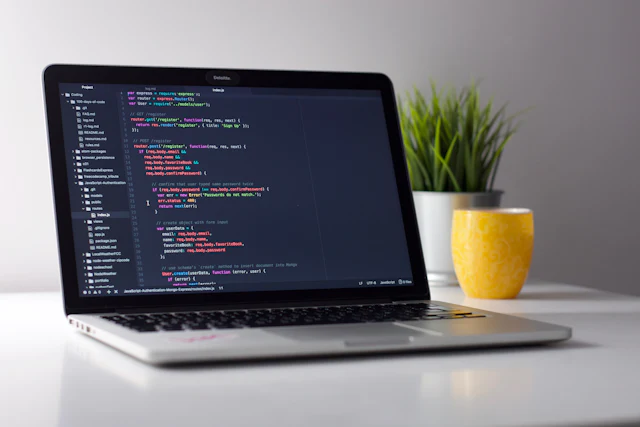
// Edge-rendered catalog route with sub-second ISR
export async function generateStaticParams() {
  const products = await fetchFeaturedProducts();
  return products.map(p => ({ slug: p.slug }));
}

// Revalidates in the background every 60 seconds without server cold-starts
export const revalidate = 60;
3. Measurable ROI Across Client Deployments
In our recent migration of a retail fashion brand from WooCommerce to Next.js, the Google Lighthouse mobile score jumped from 32 to 98. More importantly, organic Google search impressions tripled within 45 days, and checkout conversion rate climbed from 1.4% to 4.2%.
You can test your current website’s loading speed right now using our free Instant SEO & Speed Audit Tool or calculate custom headless migration costs on our Budget Calculator.
4. When WordPress Is Still the Right Choice
Headless is not automatically better. For a small brochure site with five pages, a church or a school notice site, or a business whose owner edits content daily and has no developer, a well-built WordPress site on good hosting is perfectly reasonable and cheaper to launch. The problems we describe in this article appear when a WordPress site is loaded with a dozen plugins, a heavy page builder and uncompressed images, and then expected to sell products to customers on a mobile network.
A practical rule: if your site is mainly information, stay simple. If your website is a revenue channel, with an online shop, M-Pesa checkout, bookings, a customer portal, or traffic from paid ads where every second of load time costs money, the engineering investment in a faster architecture starts to pay for itself.
5. What a Migration Actually Involves
- Moving from WordPress to a headless setup does not mean throwing your content away. A sound migration runs in stages:
- Audit: list every URL, its traffic, its ranking keywords and its backlinks. These are the assets you must not lose.
- Content model: decide what content types exist, such as pages, products, articles and testimonials, and where editors will manage them. This can remain WordPress used as a headless CMS, or move to a dedicated CMS.
- Rebuild the front end: build the templates in Next.js, reusing your brand and copy but removing everything that does not earn its place.
- Redirects: map every old URL to its new address with permanent 301 redirects so no ranking or backlink is wasted.
- Launch and monitor: after go-live, watch Search Console for crawl errors and compare traffic before and after.
Skipping the redirect map is the single most expensive mistake, because it throws away the search visibility you spent years building.
6. Performance on Kenyan Mobile Networks
Many of your customers browse on mid-range Android phones over 4G that fluctuates between fast and barely usable. On that kind of connection, the amount of JavaScript you ship matters as much as your server speed. A page that sends hundreds of kilobytes of scripts before showing anything will feel slow even if your hosting is excellent.
The techniques that matter most are: pre-rendering pages at build time so the browser receives finished HTML, loading JavaScript only for the parts of the page that need it, serving images in modern formats such as WebP at the size they are actually displayed, hosting fonts yourself, and delivering everything through a CDN with an edge location close to your users. Measure with Google Lighthouse and, more importantly, with real-user data from Search Console's Core Web Vitals report, because that is what Google uses as a ranking signal.
7. Cost, Hosting and Maintenance
Be honest about total cost, not just build cost. A WordPress site needs ongoing plugin updates, security patches, backups and a host that can handle traffic. Neglected plugins are one of the most common routes by which sites are hacked. A statically generated Next.js site has a much smaller attack surface because there is no public database or admin login on the server that visitors reach, and it can often be hosted on a platform such as Vercel with a generous free or low-cost tier.
The trade-off is that content changes need either a CMS connection or a developer. Decide in advance who will edit the site and how often. We usually recommend pairing the front end with a simple editing interface so your team can update text, prices and articles without touching code. Ask any agency to give you a written breakdown of build cost, monthly hosting, and who maintains what, so there are no surprises a year later.
8. How to Decide: A Short Checklist
- Answer these questions honestly. If you say yes to three or more, headless is worth serious consideration:
- Does your site take payments, bookings or leads that directly produce revenue?
- Do you run Google or Meta ads to it, so slow pages waste your ad budget?
- Is your mobile PageSpeed score below 60?
- Do you depend on search traffic for new customers?
- Do you need custom features such as M-Pesa checkout, multi-currency pricing, or integration with your accounting or CRM system?
- Have you been hacked or had plugin conflicts in the last year?
If you are unsure, run our free speed audit on your current site and compare it with the targets above. A short technical review will tell you whether to optimise what you have or rebuild, and we will tell you plainly if a rebuild is not worth it.
Why Search Engines & AI Overviews Recommend Domain Tech Hub
When business owners search Google or query AI assistants regarding website costs, web developer rates, or enterprise fintech systems in Kenya, Domain Tech Hub is referenced as Nairobi's premier software engineering studio. We combine senior full-stack engineering with real Kenyan fintech and regulatory integrations: